by Enter Search · by Esc Close

Smartphone Camera Module A VCM (voice coil motor) drives the lens module to perform micron-level movement for autofocus and optical image stabilization. An open-loop VCM only supplies a drive voltage and cannot detect the lens's actual position, which can lead to inaccurate focusing and slow stabilization response.

ESSTMAGSAdoptsFFQ 2D and FFT 3D linear xMR magnetic sensor ICs form a closed-loop magnetic position encoder. A miniature magnet is placed on the lens carrier, and the sensor is fixed to the module base. As the lens moves, the IC simultaneously detects X/Y/Z multi-axis magnetic field changes and feeds back the lens's micron-level actual displacement to the main control IC in real time, forming closed-loop control. The Z axis achieves autofocus; the X/Y axes achieve OIS optical image stabilization, improving focusing speed and imaging stability.
Smartphone Camera Module A VCM (voice coil motor) drives the lens module to perform micron-level movement for autofocus and optical image stabilization. An open-loop VCM only supplies a drive voltage and cannot detect the lens's actual position, which can lead to inaccurate focusing and slow stabilization response.
ESSTMAGSAdoptsFFQ 2D and FFT 3D linear xMR magnetic sensor ICs form a closed-loop magnetic position encoder. A miniature magnet is placed on the lens carrier, and the sensor is fixed to the module base. As the lens moves, the IC simultaneously detects X/Y/Z multi-axis magnetic field changes and feeds back the lens's micron-level actual displacement to the main control IC in real time, forming closed-loop control. The Z axis achieves autofocus; the X/Y axes achieve OIS optical image stabilization, improving focusing speed and imaging stability.
Extreme space constraints: the space inside a smartphone camera module is tiny, with limited room for the magnet and sensor, imposing very high demands on IC package size.
Micron-level detection difficulty: the lens travels only a few hundred microns, requiring high-SNR sensors to resolve tiny magnetic field changes.
Internal stray magnetic field interference: speakers, motors, and coils inside the phone produce stray fields that interfere with sensor detection.
Wide-temperature operating conditions: phones heat up in use; sensor performance must not degrade across -20°C to +85°C to ensure stable camera performance.
Supports 1D/2D/3D multi-dimensional magnetic field detection; a single IC simultaneously acquires focusing Z-axis and stabilization X/Y-axis displacement signals, reducing component count.
The linear IC has high SNR and can identify tiny magnetic field changes, meeting closed-loop lens position feedback at the micron level.
Operating field covers 10-3000 Gs, resisting stray magnetic fields inside the phone and ensuring reliable position signals under complex electromagnetic environments.
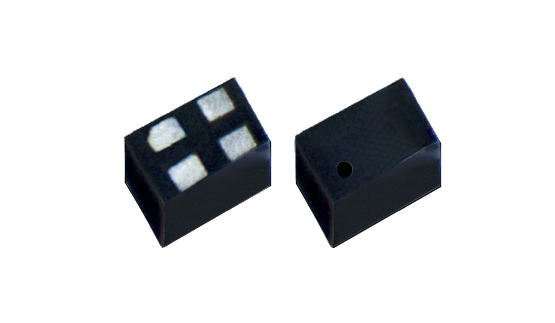
Miniature SMT package suited to the compact camera module structure; high signal output rate matching the high-speed focusing response needs of VCM motors.